PILOT PROJECT OF LearnPF ON PRODUCTIVE FAILURE
(May 07, 2026)
LearnPF is a Singapore–Swiss AI startup advancing math education through the Productive Failure (PF) pedagogy and their proprietary AI engine. Prof. Manu Kapur - Founder of LearnPF, is the Director of the Singapore-ETH Centre and Professor of Learning Sciences and Higher Education at ETH Zürich, where he also leads the Future Learning Initiative and co-founded the ETH Zürich–EPFL partnership. Trained as an engineer and statistician, he is internationally recognised for pioneering the theory of Productive Failure, which has transformed approaches to STEM education and informed large-scale curriculum reform in Singapore and beyond.
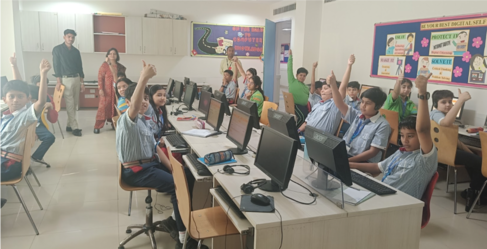
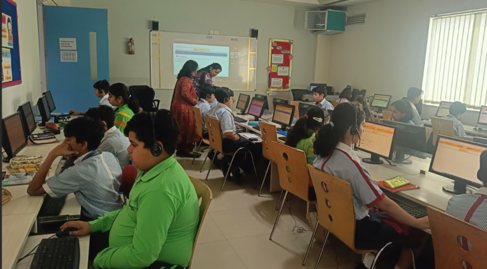
A pilot project of LearnPF was organised at GD Goenka Public School on 7th May’ 2026 on the science of Productive Failure. Students of Class VII A got an opportunity to participate in this innovative pilot project. The resource person and Co-founder of LearnPF- Mr. Alfred Aloysius, guided the students through different phases of the pilot programme via an online session while the students remained logged into their respective systems for a personalised and interactive learning experience. The session aimed to introduce students to a unique and research-based approach to deeper learning through exploration and problem-solving.
Productive Failure is a research-backed learning approach that encourages students to attempt solving challenging problems before formal instruction is provided. Instead of immediately receiving solutions, learners first explore, think critically, test ideas, and even make mistakes. This process activates prior knowledge, develops creativity, builds resilience, and prepares the brain for deeper conceptual understanding. The approach, developed through years of educational research, focuses on helping students become confident problem-solvers who can apply knowledge meaningfully in new situations.
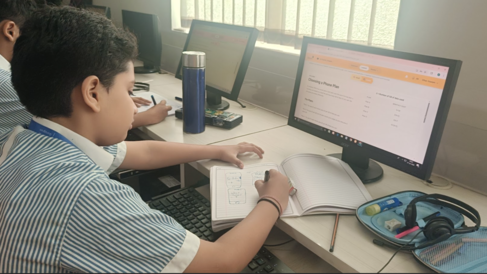
The students displayed great excitement, enthusiasm, and active participation throughout all phases of the session. They attempted MCQs based on an upcoming topic that they had not explored previously, which encouraged them to think independently and creatively. Students also participated in the “Invent Problem” activity where they designed innovative solutions and confidently presented their ideas before their peers. Mr. Alfred appreciated the creativity, originality, enthusiasm and confidence demonstrated by the Goenkans during the session. The workshop concluded on a positive note with gratitude towards the school for providing students with such a meaningful and future-ready learning opportunity.